
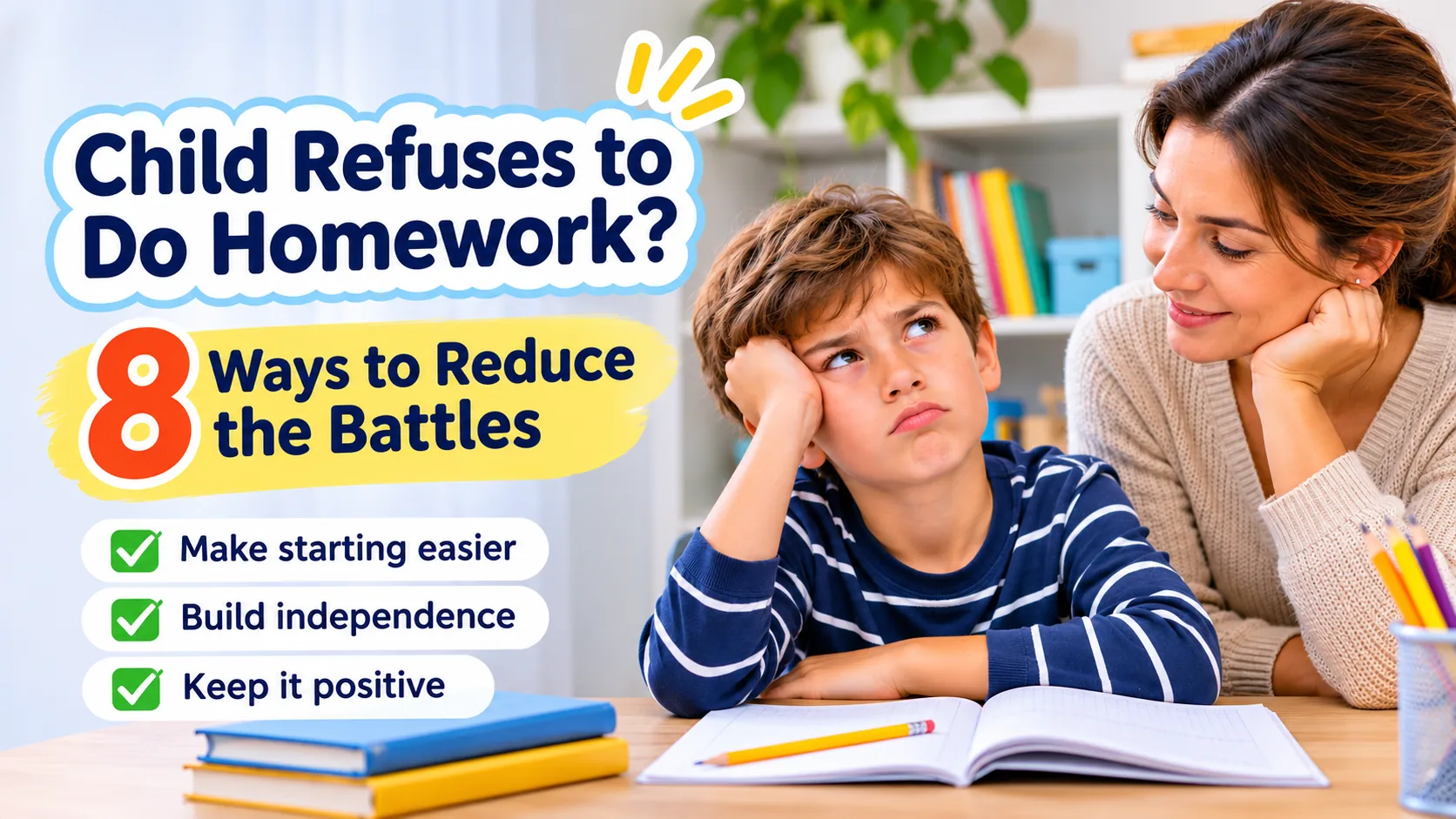
Child Refuses to Do Homework? 8 Ways to Reduce the Battles
It’s 8:45pm. The homework is still untouched. You’ve asked about it twice, your child has promised to start “in a minute”, and everyone is getting irritated. By the time the books finally open, there’s barely enough time to finish before bed.
If this sounds familiar, you don’t necessarily need a stricter timetable or a bigger reward. You need to understand why your child is avoiding the work and make it easier for them to begin—without turning every evening into a contest of wills.
Here are eight practical ways to respond when your child refuses to do homework, from primary school through the early teen years.
First, find out what “I don’t want to” really means
Homework refusal can look like laziness from the outside, but the reasons vary. A child might be exhausted after school, unsure how to answer the first question, worried about getting something wrong, distracted by a phone, or overwhelmed by how much there is to do. Some children genuinely need more support with planning and getting started.
Try asking at a calm moment, not during an argument: “Which part is hardest: getting started, understanding it, or finding the time?” The answer tells you which problem to solve.
1. Agree on a starting window—not an endless negotiation
Children benefit from predictable routines, but there is no single perfect homework hour. One child works best after a snack and some movement; another needs a longer break. Choose a realistic window together, taking school, sport, dinner and bedtime into account.
For example: “Homework starts between 5:00 and 5:30. You can choose when within that window.” Once agreed, avoid renegotiating it every evening. A regular time and a quiet, well-lit place are also recommended by the American Academy of Pediatrics.
2. Make the first step almost ridiculously small
“Finish your Maths” can sound enormous. “Open the worksheet and try question one” is much more manageable. The goal is to remove the hurdle of starting, not to pretend the whole assignment will take five minutes.
If the child is stuck, ask them to circle the first confusing question and try one they understand. A small start often gives you better information than another reminder to work harder.
3. Give two useful choices, not unlimited freedom
Children need some ownership, but “Do it whenever you like” can leave the decision until bedtime. Offer choices that both lead towards the same expectation:
- “Would you rather start with reading or Maths?”
- “Do you want to work at the dining table or your desk?”
- “Would you like me nearby for the first five minutes, or would you rather begin alone?”
For an older child, let them propose the start time and explain how it fits around other commitments. The responsibility is still theirs; your job is to make the expectation clear.
4. Separate a genuine learning gap from avoidance
If your child repeatedly avoids one subject, check whether the work is actually accessible. Ask them to explain the instruction or attempt one example. A child who cannot get past the first step may need teaching, not a lecture about effort.
Don’t complete the assignment for them. Instead, identify what they know, help them frame a question for the teacher, and share patterns you notice. The Education Endowment Foundation notes that parents can often be more helpful by supporting goal-setting, planning and managing emotions than by taking over homework instruction.
For children who need extra practice, browse the HappyKids.fit Primary Worksheets section for the current year-group resources; only use additional practice if it addresses a specific gap rather than adding to an already overwhelming evening.
5. Make distractions less tempting before work begins
A phone buzzing beside the worksheet makes concentration harder. Agree where entertainment devices will stay during homework, while keeping any technology genuinely needed for the task available.
Put pencils, paper and books within reach. A kitchen table is perfectly fine if it is calm enough. You do not need a beautifully decorated study corner—just a place where starting does not require a ten-minute search for stationery.
6. Stay available without becoming the homework police
Hovering, correcting every line or asking “Are you finished yet?” every few minutes can turn homework into a struggle for control. Tell your child when you will be available for help, then let them work.
Try one neutral prompt: “The homework window is starting. Let me know if there’s a question you can’t work out.” Praise the specific behaviour you want to see: “You got started without waiting for me to ask again,” rather than only praising perfect answers.
The goal is independence, built gradually. Younger children may need closer supervision than teenagers; adjust your support to what the child can realistically manage.
7. Protect bedtime rather than turning unfinished work into a midnight punishment
Suppose it is 9:30pm, bedtime is 10pm, and the homework has not been started. An angry, late-night marathon may make tomorrow worse. Keep your response calm and proportionate.
You could say: “We have 20 minutes available. Start what you can, and tomorrow we’ll work out why the plan didn’t happen.” If an assignment remains incomplete, help your child take responsibility for communicating with the teacher rather than secretly finishing it for them.
If this becomes a repeated pattern, change the arrangement earlier in the day; do not rely on an exhausting last-minute confrontation. For more on why rest matters, read our guide to teen sleep and tiredness.
8. Look for patterns and involve the teacher early
A difficult evening is one thing. Weeks of missing assignments, tears, headaches before homework, or a child spending far longer than classmates on ordinary tasks deserve closer attention.
Ask the teacher: “What should my child be able to do independently? Is this amount of homework typical? Where are they getting stuck in class?” Discuss whether instructions, workload or support need adjusting. Persistent distress or major changes in mood, sleep or school attendance may also warrant advice from a qualified health professional.
A simple conversation to try tonight
Instead of: “Why do I have to keep reminding you?”
Try: “I can see homework has become a battle. I want us to make evenings easier. What gets in the way of starting? Let’s agree on a time that works, and I’ll help if you’re stuck—but I won’t keep chasing you.”
Keep the first experiment small. Choose one starting window and one way to handle questions. See what actually happens over several school days, then adjust. A routine that works imperfectly is better than a complicated system nobody follows.
Frequently asked questions
Should I reward my child for doing homework?
Encouragement and small, predictable privileges can help some children establish a routine, especially at first. Avoid making every question a negotiation over prizes. Recognise effort, getting started and following through, and gradually shift the emphasis towards independence.
Should I sit with my child while they work?
For younger children, a nearby adult can help them settle. Older children often need more space. Be available to explain instructions or help plan, but let your child do the thinking and writing.
What if my teenager says homework is their responsibility but never does it?
Respect the wish for independence while agreeing on observable expectations and realistic consequences. Ask what support they want, make sure the work is manageable, and contact the teacher if missed assignments continue. Our IGCSE exam stress guide for parents also covers supporting older students without constant pressure.
The bottom line
When a child refuses to do homework, the answer is rarely “remind them louder”. A workable starting routine, smaller first steps, a calm response and help with genuine learning difficulties usually give families a better place to begin. You are not trying to win one evening’s argument; you are helping your child develop a skill they will eventually use without you.
Further reading: American Academy of Pediatrics: Developing Good Homework Habits · Education Endowment Foundation: Homework evidence review.