Strength Training for Kids: Is It Safe, and How Should They Start?
Sooner or later, many children ask to try the weights at the gym or copy a workout they have seen online. Plenty of parents hesitate about strength training for kids, often because of something they heard years ago: that lifting stunts growth, or that it is only for teenagers. Current paediatric guidance is more reassuring than that, with some clear conditions attached.
The American Academy of Pediatrics (AAP) reviewed the benefits and risks of resistance training for children and adolescents in a 2020 clinical report. Its summary for families puts the conclusion simply: children of all ages with proper supervision can benefit from resistance training. Resistance training simply means making muscles work against a force. That force can be a dumbbell, but it can just as well be a resistance band or the child’s own body weight.
The myths that put parents off
The biggest worry is usually growth. KidsHealth’s medically reviewed guide to strength training states that when done properly, strength training won’t hurt growing bones. The key words are “done properly”: the injuries that do happen are mostly linked to poor supervision. In the same guidance’s words, most injuries happen because a child was goofing around and not supervised.
The second myth is that children will “bulk up”. Before puberty, children can get noticeably stronger without adding much muscle size. Bigger muscles generally come later, after puberty, so a nine-year-old doing push-ups is building strength and coordination rather than a bodybuilder’s physique.
There is also no single starting birthday. The AAP points out that it is not age alone that determines training participation: a child who has been doing gymnastics for years is ready for more than a complete beginner of the same age. For the youngest children, play already counts. The AAP notes that children as young as five can build strength with one-legged hops or frog jumps.
What sensible strength training looks like
A child’s programme should not be a smaller copy of an adult’s gym routine. Good programmes, whether at school, in a sports club or at a gym with a qualified youth coach, tend to share a few features:
- Technique before weight. Children learn each movement with no weight at all. Body-weight exercises such as squats, push-ups and sit-ups come first.
- Light loads and more repetitions. KidsHealth suggests starting with one or two sets of 8–12 repetitions. If a child cannot comfortably manage at least eight with good form, the weight is too heavy.
- Child-sized equipment. Children should not use machines designed for adults.
- A warm-up and a cool-down. At least 5–10 minutes of easy aerobic activity and moving stretches beforehand, and something gentler to finish.
- Rest days. KidsHealth suggests two or three sessions a week of at least 20–30 minutes, with at least a day off between sessions.
Supervision is the part that matters most. The NHS says the same for teenagers: young people can use weights if a qualified adult trains them to use the weights correctly and supervises them. A teenager working out alone from a social media video, trying to lift as much as possible, is the situation to steer away from.
Where it fits in a week
Strength work is one ingredient, not the whole meal. The NHS physical activity guidelines recommend that children and young people aged 5 to 18 aim for an average of at least 60 minutes of moderate or vigorous activity a day across the week. Some of that activity should strengthen muscles and bones. Many muscle- and bone-strengthening activities need no equipment at all: the NHS lists examples such as gymnastics, football, jumping and martial arts.
With a younger child, that might simply mean a playground session, a bike ride and a few rounds of hopping games. A 13-year-old keen on the gym might do two supervised strength sessions alongside team sport and walking to school. If you’d like a light way to keep track, our weekly activity tracker lets children log a mix of activities without turning it into a competition. The 30-Day Kids Fitness Challenge includes simple body-weight moves.
When to check with a doctor first
Most healthy children can start body-weight exercise without a medical check. The AAP advises seeing a medical professional before beginning a resistance training programme if a child has had conditions such as uncontrolled high blood pressure (hypertension), uncontrolled seizures, certain heart conditions or chemotherapy. More generally, the NHS advises getting medical advice about exercising if a child has any health condition.
If your child has pain, swelling or any other sign of injury or overuse, the AAP advises getting it checked before they carry on training. Your GP is a good first port of call, and can refer to a physiotherapist if needed.
It is also worth talking with older children about what they see online. Some young athletes are tempted by anabolic steroids and other performance enhancers, and KidsHealth encourages parents to talk to their children about the dangers. If your child is keen, a qualified coach and a focus on how they feel and move, rather than how they look, is the safest place to start.
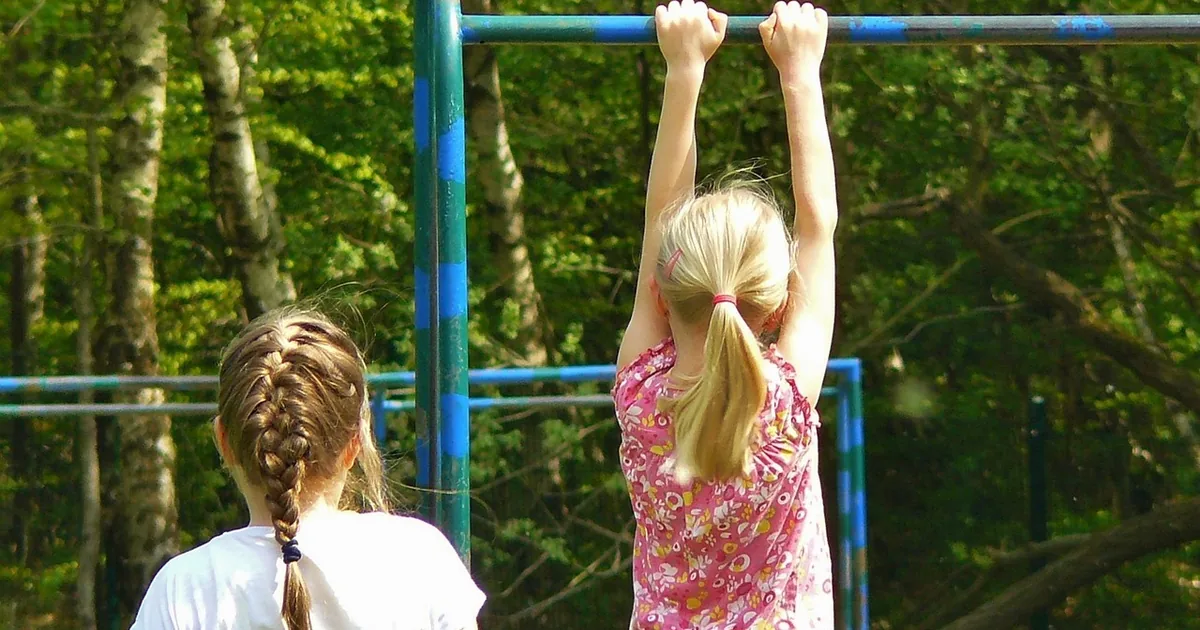
Photo: cocoparisienne via Pixabay