How Much Sugar Should a Child Have a Day?
How much sugar should a child have? According to the NHS, no more than 19g of free sugars a day for children aged 4 to 6 and 24g for children aged 7 to 10. From age 11 the limit is 30g, the same as for adults. That is roughly five, six and seven sugar cubes. Toddlers have lower limits, and babies should not have sugar added to their food or drinks at all.
Those numbers sound generous until you start reading labels. According to the NHS Healthier Families team, children are having over twice the recommended amount, and a few everyday foods explain why.
Daily limits by age
| Age | Maximum free sugars a day | Roughly |
|---|---|---|
| Under 1 | No guideline: do not add sugar | – |
| 1 year | 10g | 2½ sugar cubes |
| 2 to 3 years | 14g | 3½ sugar cubes |
| 4 to 6 years | 19g | 5 sugar cubes |
| 7 to 10 years | 24g | 6 sugar cubes |
| 11 years and older | 30g | 7 sugar cubes |
Sources: NHS, Sugar: the facts and NHS Healthier Families. These are maximums, not targets.
Which sugar counts?
The limits apply to free sugars. That means sugar added to food and drinks (by a manufacturer, a café or you at home), plus the sugar in honey, syrups, fruit juice and smoothies. Juicing or blending fruit releases its sugars, which is why a glass of orange juice counts and an orange does not.
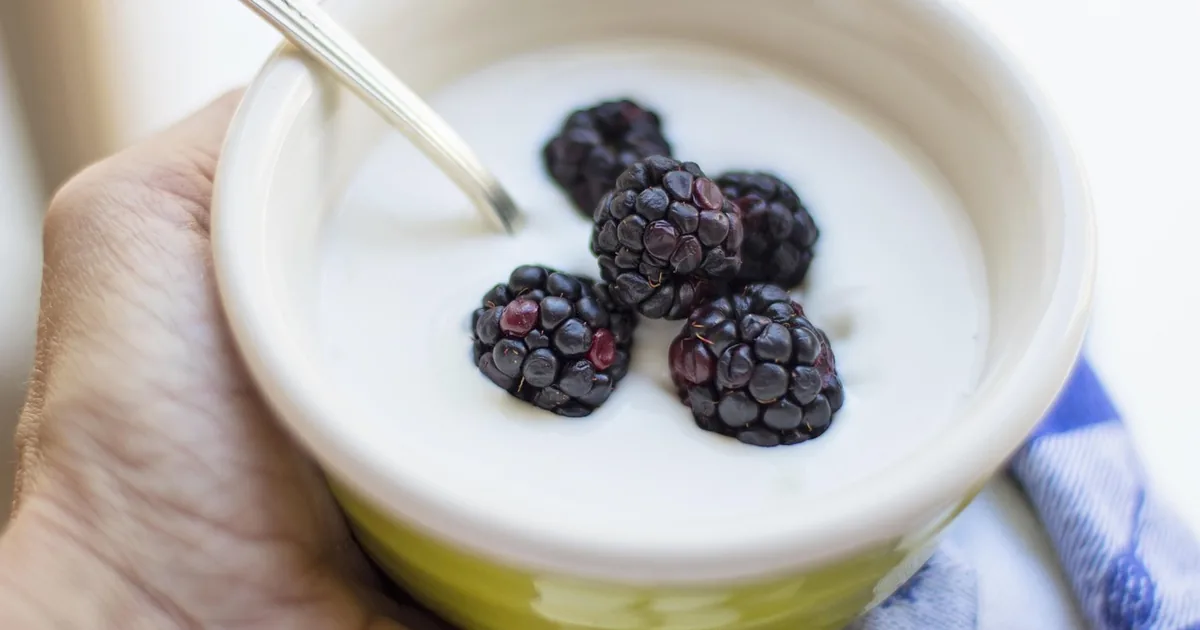
Sugar found naturally in milk, whole fruit and vegetables is not free sugar, and you do not need to cut back on it. So a bowl of plain yoghurt with chopped strawberries is a very different breakfast from a strawberry-flavoured yoghurt, even if the two labels show similar sugar totals.
Reading a label without a calculator
On the back of a pack, look for the line “Carbohydrate, of which sugars”. It shows all the sugar in the food, natural and added, so it is best used for comparing similar products. As a rule of thumb from the NHS:
- High: more than 22.5g of total sugars per 100g
- Low: 5g or less per 100g
Anything in between is medium. Front-of-pack traffic-light labels use the same idea: red for high, amber for medium, green for low. A trolley with more greens and ambers than reds is a good sign.
The ingredients list tells you where the sugar comes from. Ingredients are listed in order of weight, so sugar near the top means a lot of it. Watch for its other names too: glucose, dextrose, fructose, sucrose, honey, fruit juice concentrate, maltose and molasses all count.
Cutting back without a battle
Sudden bans tend to make sweets more exciting. Gradual changes that nobody has to argue about work better.
Drinks are the easiest place to start. Water and plain milk are the best everyday choices. If your child is used to squash or juice, add a little more water each week so the change is hard to notice. A water bottle they chose themselves, or a simple chart like our daily water intake tracker, can make the switch feel like their idea.
For breakfast, an unsweetened cereal topped with sliced banana or berries keeps the sweetness while cutting added sugar. Swap flavoured yoghurts for plain ones with fruit stirred in. When you bake, the NHS notes that most recipes still work with less sugar; jam, meringues and ice cream are the exceptions. And if biscuits are not kept in the cupboard, they cannot become a daily argument.
The NHS advises against switching younger children to sweeteners: if your child is not having them already, it is best not to start. For children aged 11 and over who drink a lot of sugary drinks, no-added-sugar versions can be a temporary step on the way to water.
Sugar is not only about weight. According to NHS Healthier Families, tooth decay is the leading cause of hospital admissions for children aged 5 to 9, so cutting down on sugary snacks between meals protects teeth as well.
If you’re worried about your child’s weight, their teeth or how they eat, your GP, health visitor or dentist can give advice that fits your child. This article is general information and not a substitute for individual medical advice.