
Is Melatonin Safe for Kids? What Every Parent Needs to Know in 2026
Millions of children take melatonin gummies every night. It’s cheap, it’s widely available, and it feels like an easy fix when your child simply won’t sleep. But new research published in early 2026 is asking a question parents deserve to hear: should they?
A major review published in the World Journal of Pediatrics and widely covered in March 2026 sent a clear message to parents: we don’t know enough yet. While melatonin is generally considered safe for short-term use, researchers raised serious flags about what happens when kids take it regularly for months — or years.
Why Melatonin Is Different From a Regular Supplement
The issue isn’t just effectiveness. It’s about what melatonin actually is: a hormone. Not a vitamin. Not a herbal supplement. A hormone that affects the body far beyond just sleep — including the immune system, metabolism, and reproductive development.
There’s also a product quality issue. In countries like Malaysia, the US, and much of Asia, melatonin is sold as an unregulated dietary supplement. Studies have found that what’s on the label often doesn’t match what’s in the bottle — with some products containing far higher doses than stated, and others containing contaminants.
Worth knowing: countries including the UK, Australia, Japan, and much of the EU classify melatonin as a prescription-only medication for children. That’s worth thinking about.
What the Research Actually Says
Here’s where it gets nuanced — and this is exactly the kind of nuance parents deserve.
The Good News
Short-term, low-dose melatonin does appear to help some children fall asleep faster — particularly kids with ADHD, autism spectrum disorder, or delayed sleep-wake phase disorder. For jet lag or resetting a disrupted schedule, it has a reasonable evidence base.
The Concerns
For neurotypical children with run-of-the-mill sleep struggles? The picture is much murkier. Long-term studies are limited. Because melatonin is a hormone, researchers are paying close attention to potential effects on pubertal development, cardiovascular health, and the immune system — areas where even small hormonal disruptions during childhood could have lasting impact.
What’s the Right Dose If Your Doctor Recommends It?
If your child’s paediatrician has recommended melatonin, the International Pediatric Sleep Association suggests the following as maximum starting doses — given approximately 30 minutes before bedtime:
- Under 3 years: Not recommended without direct medical supervision
- 3–5 years: 0.5 mg
- 6–12 years: 1–3 mg
- Teens (13–17): Up to 5 mg, short-term only
A critical point: higher doses don’t work better. They can actually backfire — suppressing your child’s own natural melatonin production over time, which makes the underlying problem worse.
Always store melatonin like any other medication — locked away and out of reach. Those gummy formats are very appealing to young children.
The Red Flags to Watch For
Stop using melatonin and speak to your doctor if your child experiences any of the following:
- Morning grogginess or difficulty waking most days
- Headaches after taking melatonin
- Increased bedwetting or urination at night
- Paradoxical hyperactivity — becoming more wired, not less
- Sleep problems getting worse when you try to stop
What Actually Works Instead
The science is clear: for most children, behavioural and environmental changes outperform melatonin — and they don’t come with hormonal question marks attached.
1. Set a Consistent Bedtime
Same time every night, including weekends. This single habit is the biggest driver of healthy sleep in children of all ages.
2. Enforce a Screen Curfew
Blue light from phones and tablets directly blocks natural melatonin production. Aim for no screens 60–90 minutes before bed. This is one of the most impactful — and most resisted — changes you can make.
3. Get Morning Light
Even 10 minutes of sunlight early in the day anchors the body clock and supports natural melatonin production at night. It sounds too simple — but the research backs it up consistently.
4. Cool Down the Bedroom
A room temperature of around 18–20°C with blackout curtains makes a real difference — especially for teens, whose body temperature regulation during sleep is particularly sensitive.
5. Keep Kids Moving
Kids who exercise regularly — football, swimming, athletics, anything — fall asleep faster and sleep more deeply. Physical tiredness is one of the most natural sleep aids there is. Need ideas? Check out our guide to keeping kids active during school holidays.
6. Build a Wind-Down Routine
A consistent 20–30 minute wind-down signals to the brain that sleep is coming. Reading, a warm shower, or quiet music all work. The key is consistency — the same routine every night becomes a sleep trigger over time.
A Word on Teens and Exam Pressure
If your teenager genuinely cannot fall asleep until midnight, they might not be being difficult. Adolescent biology literally shifts the body clock later — it’s a real physiological change called delayed sleep-wake phase, not a character flaw.
For these teens, strategically timed melatonin at a very low dose (0.5 mg, taken 5–6 hours before the desired sleep time) can help reset the clock — but this should always be done with medical guidance, not a guess.
The exam pressure angle matters too. During IGCSE and O-Level season, teens studying late are actively delaying their own melatonin release every night they stare at a screen until midnight. Sleep deprivation tanks memory consolidation and focus — the very things they need most. Getting sleep right during exam season isn’t a luxury. It’s a performance strategy.
You Don’t Need to Feel Guilty
If you’ve been giving your child melatonin, you don’t need to feel bad about it. You were doing what millions of parents do — trying to help your kid sleep so everyone in the house can actually function. That’s not negligence. That’s parenting.
The point of the new research isn’t to shame parents. It’s to make sure we use it thoughtfully, keep doses low, don’t rely on it indefinitely, and — most importantly — talk to the paediatrician rather than just following the group chat.
📋 What This Means For You — Quick Summary
- Melatonin is a hormone — not a vitamin or supplement — and long-term safety in children is still under review
- Short-term use at low doses is reasonable for some children, especially those with ADHD or sleep disorders
- Always start with the lowest dose (0.5–1 mg) and don’t use it as a long-term nightly fix without medical advice
- Fix the environment first — consistent bedtime, no screens before bed, morning light, and physical activity genuinely work
- Store it locked away — gummy formats are attractive to young children
- If your child’s sleep problems persist, see a paediatrician rather than self-prescribing indefinitely
Similar Posts
How to Choose the Best Family Insurance Plan: A Mom’s Guide
As moms, one of our key responsibilities is ensuring our family’s health and financial security. A comprehensive family insurance plan can provide peace of mind, especially when faced with unexpected medical expenses. But with so many options available, finding a plan that offers good coverage without overspending can feel like a daunting task. Having gone…
IGCSE Exam Stress: A Survival Guide for Parents
It starts subtly. The kitchen table disappears under a mountain of past papers. There’s a new and alarming frequency of the phrase “I’m going to fail everything.” Someone has colour-coded seven different revision timetables and stuck them to the wall — and yet, somehow, still hasn’t actually started revising. Welcome to IGCSE season. The Cambridge…
My Son Is Obsessed With Fortnite — Here’s How I Handle It As a Parent”
If you have a teenage son at home, there’s a reasonable chance you’ve heard the words “just one more game” at least once today. In our house, that phrase belongs to my 15-year-old — and nine times out of ten, the game in question is Fortnite. For the uninitiated: Fortnite is a free-to-play online battle…
Australia Passes Law Banning Social Media for Kids Under 16
In a decisive step towards safeguarding children, Australia has enacted a law prohibiting children under 16 from using social media platforms such as TikTok, Instagram and Snapchat. This legislation, spearheaded by the Albanese government, aims to curb the negative impacts of social media on young users, including exposure to harmful content, cyberbullying and mental health…
International School vs. Public School: A Mom’s Honest Take
Whenever I meet friends for coffee, one topic seems to come up again and again: international schools vs. public schools. With my kids studying in an international school, and some of my friends opting for public schools, we’ve had our fair share of lively debates! As parents, we all want the best for our children,…
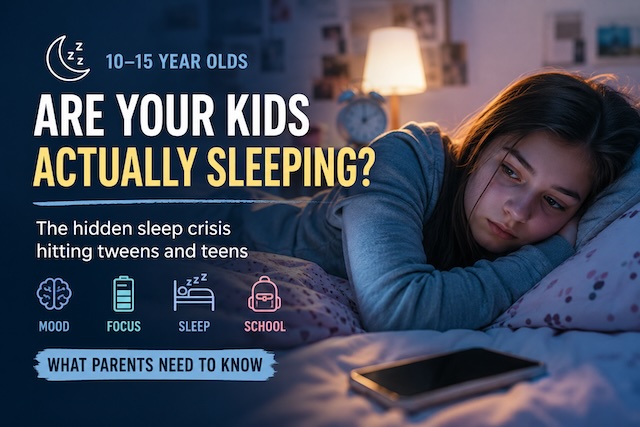
Are Your Kids Actually Sleeping? The Hidden Sleep Crisis Hitting 10–15 Year Olds
Pediatric sleep experts warn of a growing sleep crisis among tweens and teens. Learn the hidden signs of sleep deprivation and what parents can do.