
FREE PRINTABLE MOVEMENT BREAK PLANNER
Kids Movement Break & Active Play Planner
Plan short movement breaks around homework, screen time and everyday routines
12 break ideas • Ages 6–12 • 3-page A4 printable • 7-day tracker
Short Movement Breaks for Busy Days
Long stretches of homework or screen time can leave children restless or sluggish. Movement breaks for kids work best when they are short and playful, so this planner helps families fit them into everyday routines. Each idea has an easier option, so every child can join in, and there are no targets to hit.
Download the Free Kids Movement Break & Active Play Planner
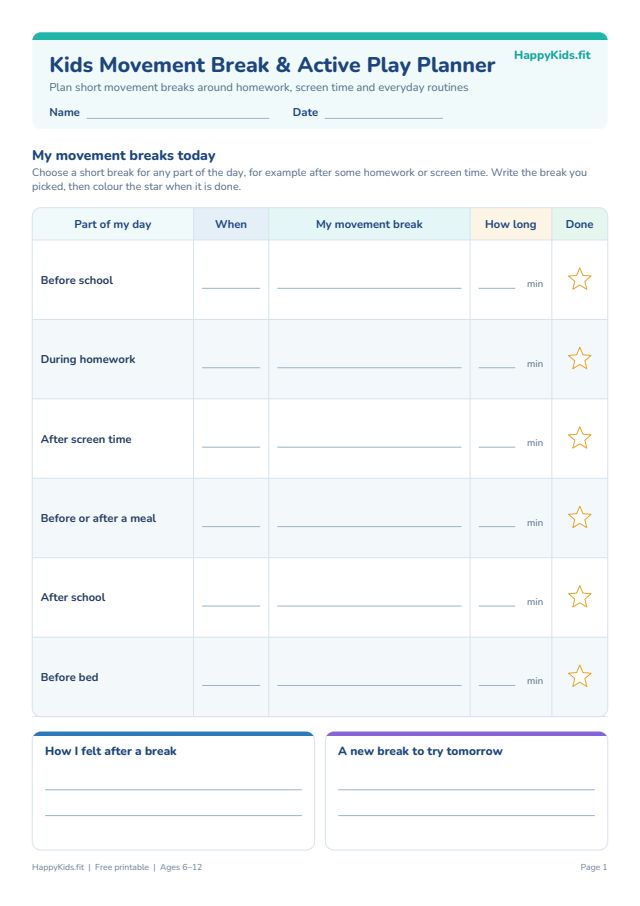
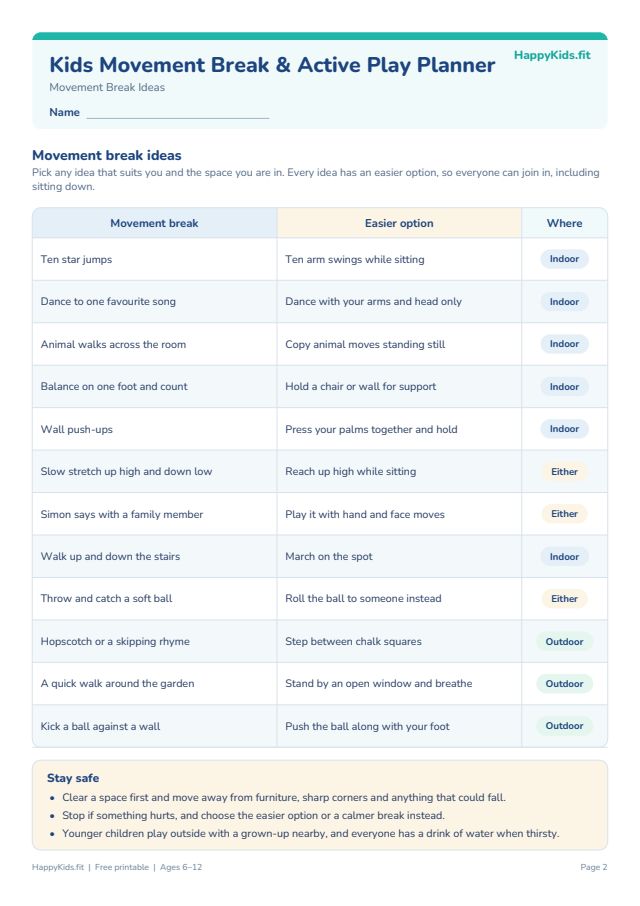
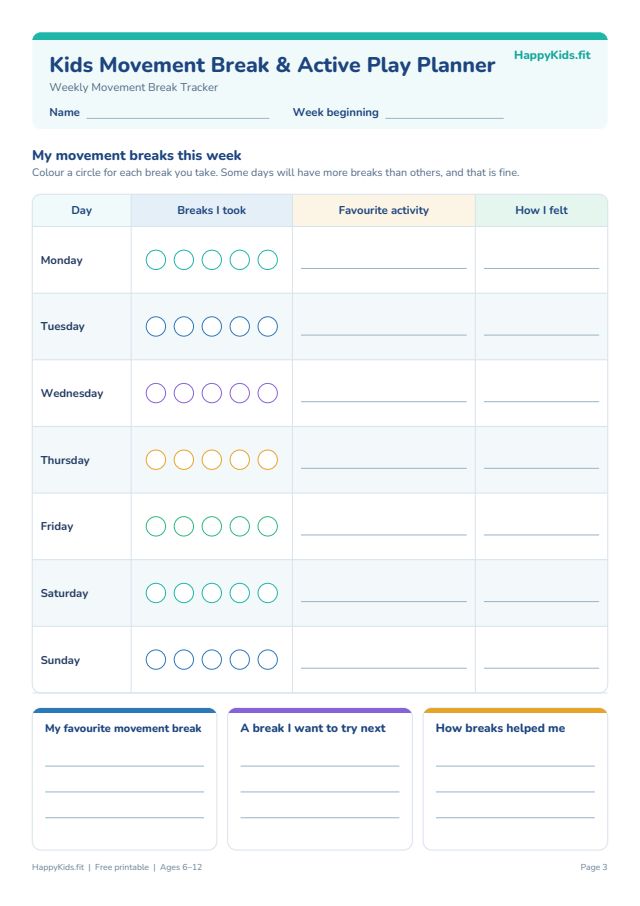
The free PDF includes the Kids Movement Break & Active Play Planner, a Movement Break Ideas page and a Weekly Movement Break Tracker page.
What’s Inside the Printable?
Daily movement break planner
Plan a short break for parts of the day such as homework, screen time and meals, with how long it lasts and a Done star.
Movement break ideas
Twelve indoor and outdoor ideas, each with an easier option that can be done standing still or sitting down, plus safety tips.
Weekly movement break tracker
Colour a circle for each break, note a favourite activity and how you felt, then reflect on the week.
Example Movement Breaks
Short, simple breaks fit most easily into a busy day. These examples show how a family might fill in the planner.
During homework
- After the maths worksheet: dance to one song – 3 min
- Halfway through reading: animal walks to the kitchen and back
- Before spelling practice: ten star jumps, or arm swings when tired
Around screen time
- After one episode: throw and catch a soft ball – 5 min
- Between game levels: balance on one foot and count to 20
- When the tablet goes away: a quick walk around the garden
Daily routines
- Before school: Simon says with a brother or sister
- Waiting for dinner: wall push-ups by the back door
- Before bed: a slow stretch up high and down low
How to Use the Planner
- Pick the parts of your day where a break would help, such as after 20 minutes of homework or one episode.
- Choose a short break from the ideas on page 2 and write it on the daily planner with how long it lasts.
- Colour the star for each break when it is done, and note how you felt afterwards.
- Colour a circle on page 3 for every break you take this week, and add your favourite activity.
- Look back at the end of the week and choose a new break to try next.
Suitable for Ages 6–12
Movement breaks look different at every age. Children aged 6–8 often enjoy silly, playful breaks and may plan the day with a grown-up. From 9 to 12, many can choose their own breaks, time them and fit them around homework and screens without a reminder.
Frequently Asked Questions
How is this different from the Weekly Activity Tracker and the fitness challenges?
The activity tracker records the week’s play and exercise, and the challenges follow a set daily plan. This planner is about short breaks inside routines such as homework and screen time.
How long should a movement break be?
There is no set length. A few minutes is often enough, and children can choose a break that suits their energy and the space they are in.
Can children with different abilities use it?
Yes. Every idea has an easier option, many of which can be done sitting down, and children can swap in any movement that works for them.